Publication
Prospective Health Risk Report for Europe – 2025
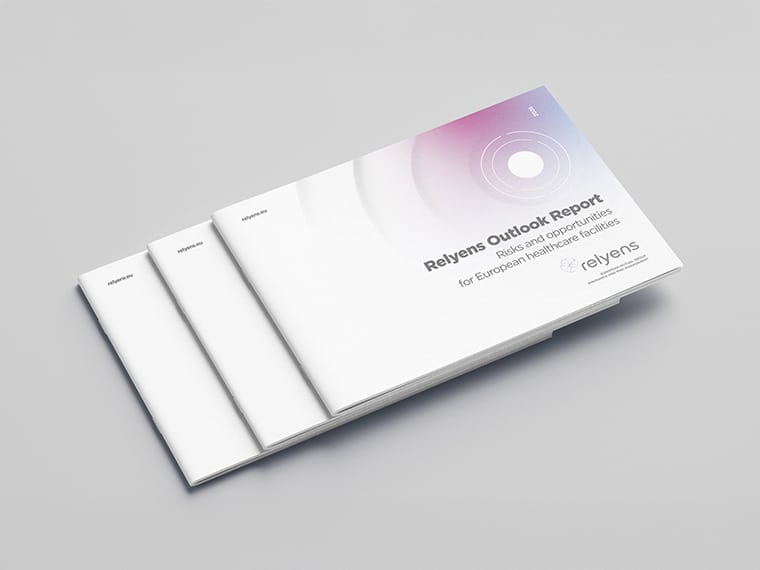
Relyens publishes its first forward-looking report dedicated to the risks & opportunities that European healthcare facilities are and will face by 2035.
A unique and scientific perspective on the vulnerabilities of European health systems
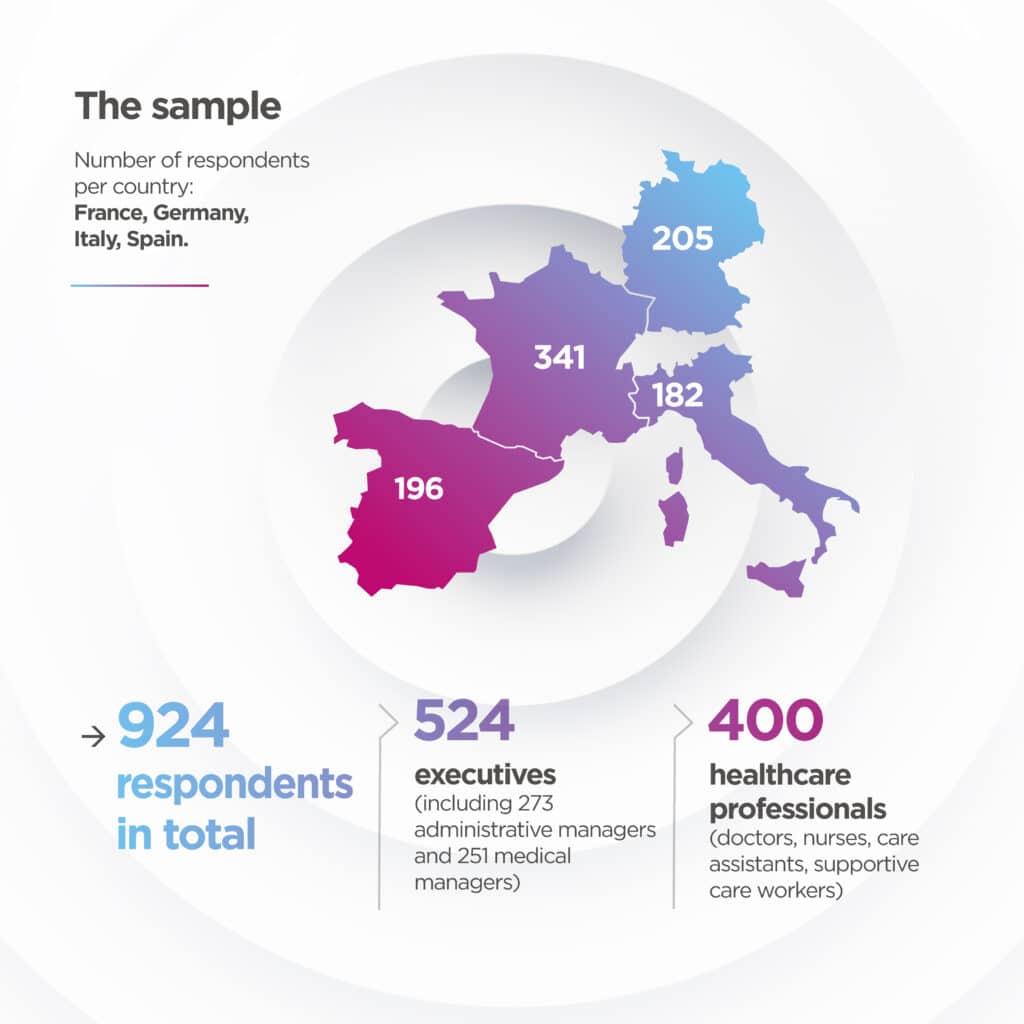
The result of an unprecedented survey conducted with Ipsos among 1,000 managers and healthcare professionals in France, Germany, Italy and Spain, as well as in-depth scientific work with a committee of international experts, this report provides a unique perspective on the vulnerabilities of European healthcare systems, through the mapping of 25 major risks.
Understanding better
to act more effectively
Beyond simply stating the facts, this report is a call to action. It demonstrates that resilience cannot be decreed; it is built through bold governance choices. Healthcare professionals are ready to transform their organizations. Our role as risk managers is to help them do so.
A new step in our commitment to healthcare facilities and professionals

“For a long time, risk management was limited to treating each crisis as an isolated event. But today, the reality is more complex: risks are interdependent. The shortage of healthcare professionals can exacerbate medical errors, the aging population increases costs, economic constraints hinder the implementation of innovation… In these interdependent balances, the links can falter, but the system must absorb the shocks.“
Dominique Godet
Managing Director of Relyens
To discover
The scale of the challenges, the human impact, shared vulnerabilities, but also paths to resilience and narratives for 2035: it’s all in the report.
- Overview
The 5 methodology, risk assessment table and Scientific Committee. - Polycrisis and the need to anticipate
How significant are the challenges ? - Patient safety at stake
What is the resulting human impact ? - Natioanl differences, European action
What are the shared vulnerabilities and distinctive specificities?
- Triggering risks and domino effect
How do risks interact? - Anticipating health risks
What are the key drivers of resilience? - From clarity to audacity: imagining te future
What narratives for 2035 ?
Key figure
80%
Risks
deemed most impactful are considered to have been insufficiently anticipated
93%
Respondents
believe that the health system situation will deteriorate between the next 5 and 10 years
72%
Healthcare professionals
believe that the staff shortage directly compromises the safety of care
Key takeaways

Rapidly accelerating, closely interconnected risks
European healthcare systems are facing a series of crises that are undermining their ability to fulfill their essential mission: providing sustainable, equitable, and safe care. This multifaceted pressure necessitates a paradigm shift in how risks are anticipated and managed. Explore this interconnectedness of crises in the report.

Identifying tipping points to anticipate systemic crises
Beyond the identified vulnerabilities, the analysis highlights the existence of critical nodes in the architecture of health systems: tipping points which, if crossed, can lead to chains of risks that are difficult to control.

Three key areas of action to activate now to strenghthen resilience
The study goes beyond simply stating the facts: it identifies practical and impactful levers for action to strengthen the resilience of healthcare facilities. The report proposes three key strategic directions; discover them within.
A groundbreaking report resulting from a scientific and field-based approach
This project, initiated by Relyens, was operated by a scientific committee composed of 5 experts internationally renowned in medicine, health economics, actuarial science and hospital governance.
- Paolo Silvano (Italy – France), Chairman of the committee
scientist, member of the board of directors of the UEHP permanently invited to the Board of Directors Relyens - Pr. David Bates (USA), Professor at Department of Health Policy and Managementand head of the Division of General Medicine at Brigham and Women’s Hospital, Harvard Medical School
- Alix Roumagnac (France), President of Predict Services, a solution for predicting and managing risky weather phenomena
- Pr. Niek Klazinga (Netherlands), Professor Emeritus at Amsterdam UMC and consultant to the OECD for theHealth Care Quality and Outcomes Program
- Pr. Marie Kratz (France), Professor at ESSEC Business School and Director of CREAR – Research Center in Economics, Finance and Actuarial Science on Risk